New Whittington Baptist Church
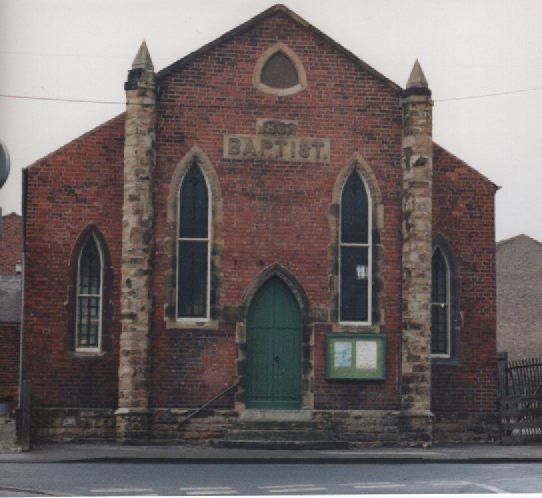
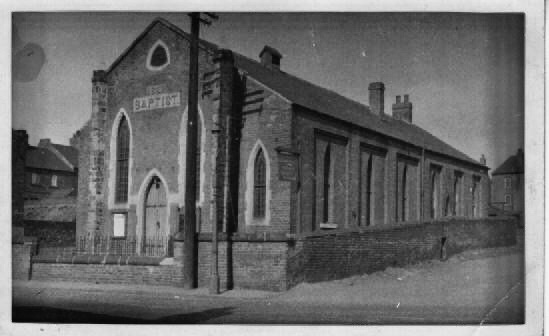
The Baptists built their chapel in 1862 on the High Street. It was at the side of the entrance to the old Market Place. It cost £600 and later a Sunday school was added at the rear. Previous to this they held their services above the blacksmiths shop on Handley Road. The building today is very much the same and used today as a workshop and storage space.
New Whittington Baptist Church memories
My Fathers Family, the Statons, lived at both Old and New Whittington from the early 1800s. They attended the local Anglican churches for all the important times of their lives.
My parents William (Bill) and Minnie Staton settled at the Crown Yard, High Street, New Whittington after their marriage in 1937. Their neighbours were other relatives including Bills parents John and Annie who lived next door.
My older sisters started to attend the Baptist Chapel just along the High Street sometime in the early 1940s. By 1945 my parents had become Christians and members of the congregation.
They were also baptised, in the baptistry. This was a small bath type chamber which was under the pulpit area. Leading down a few steps it was filled with water to a depth up to about waist high and the Pastor emersed the white dressed candidate under to signify being a born-again Christian.
I understand my sisters were also baptised when they were in their teens. When a child of the congregation is born, the parents bring him/her to church and he is dedicated rather than infant baptism in a simple service. The congregation rather than God parents promising to help with their spiritual upbringing.
I was Dedicated in this way some three weeks after my birth in May 1955.
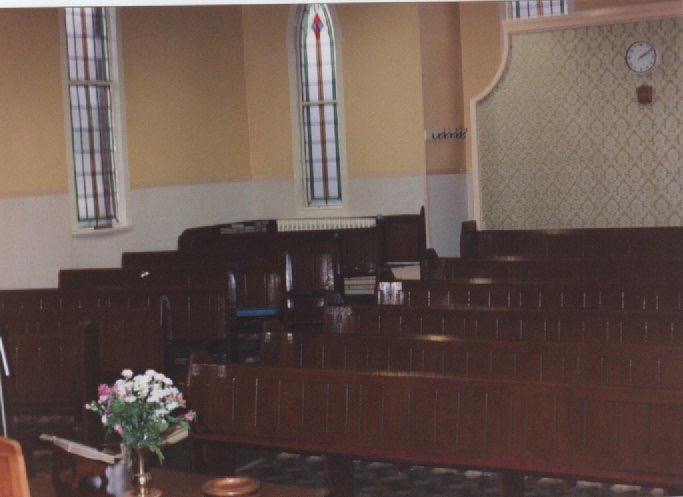
My parents soon played an active part in the Churches community. Mum cleaned the building and Dad did maintenance duty including stoking the boiler.
The boiler was situated underground in the centre of the building and accessed down some stairs from the right of the school room. The coal from Ruaines was delivered through a shoot to the right of the building accessed from the market place.
The Derbyshire wagon company gave the chapel loads of wood in payment for erecting an advertising sign in the chapel grounds. I believe by the 1970s coal was replaced by gas. Dad would often call on his way home from Barrow Hill where he worked as a Goods Guard on the Railway to maintain the awkward boiler.
They also started a ‘Coco club’ for the older children. I guess this was like a early type of youth club which met on a weekday night. As it was probably when rationing was still on, I guess this was an attraction for kids. They played games and had a bit of religious instruction at the end.
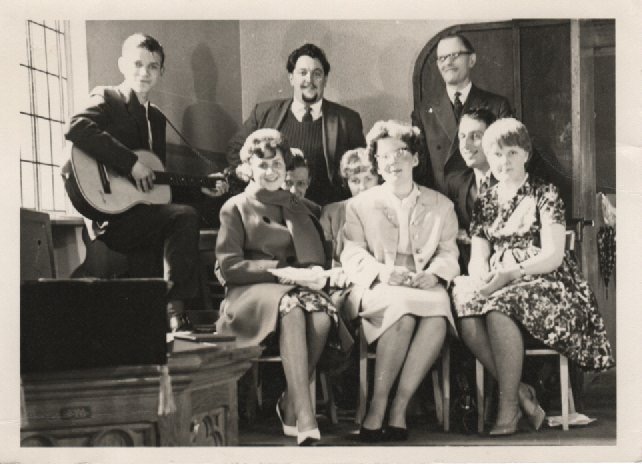
The ‘Young peoples Group’ c1962
Robert Nicholls with Guitar,Micheal Wass,Pastor Roberts,
Middle row – Kevin Sporton,Kathleen Nicholls,Keith Chappel,
Front Susan Wigfield,Catherine Roberts,Dorothy Lilley.
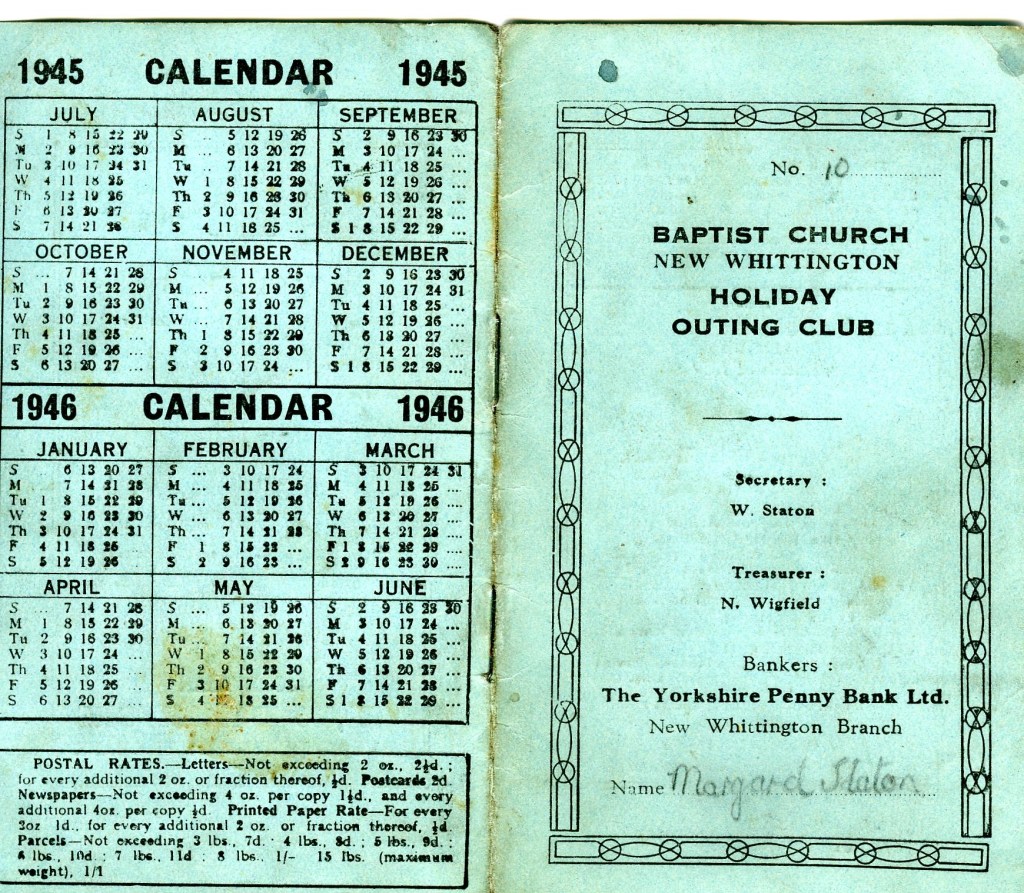
Annually some of the adult congregation and my parents took the children on a week’s camping holiday where they would stay on farms near Matlock or Calver in large bell tents. The equipment was transported on a local lorry and all the holiday makers would make their way on public transport.
This cost of the holiday was saved up for weekly throughout the year.
Sometimes the camping coincided with the religious Whitsun weekend Rally at Cliff College bible training college at Calver Derbyshire.
Both my parents became Christians here. I attended many times during the late 1950s and early 1960s. The services were in marques with smaller ones such as ‘Sunshine corner’ for children.
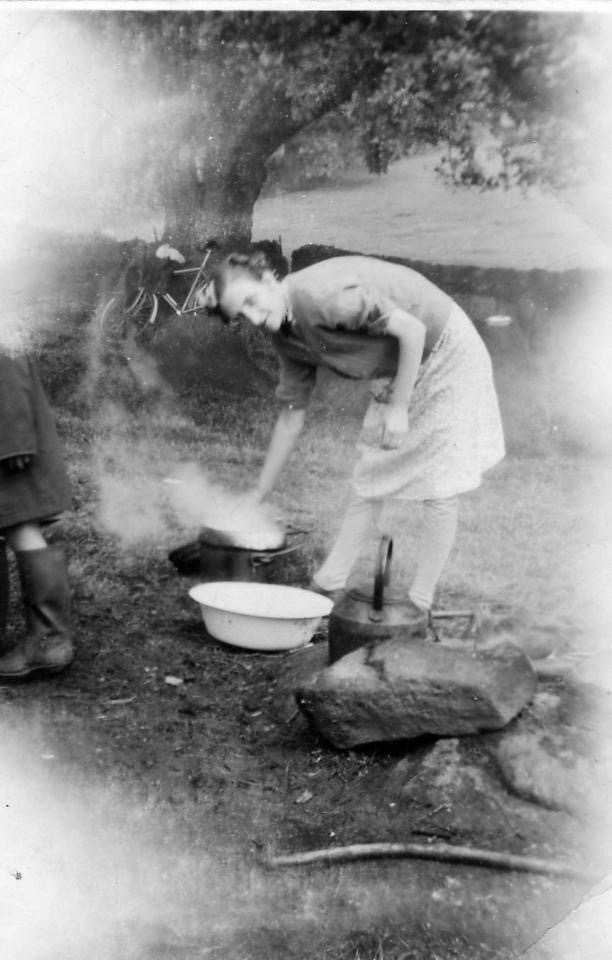
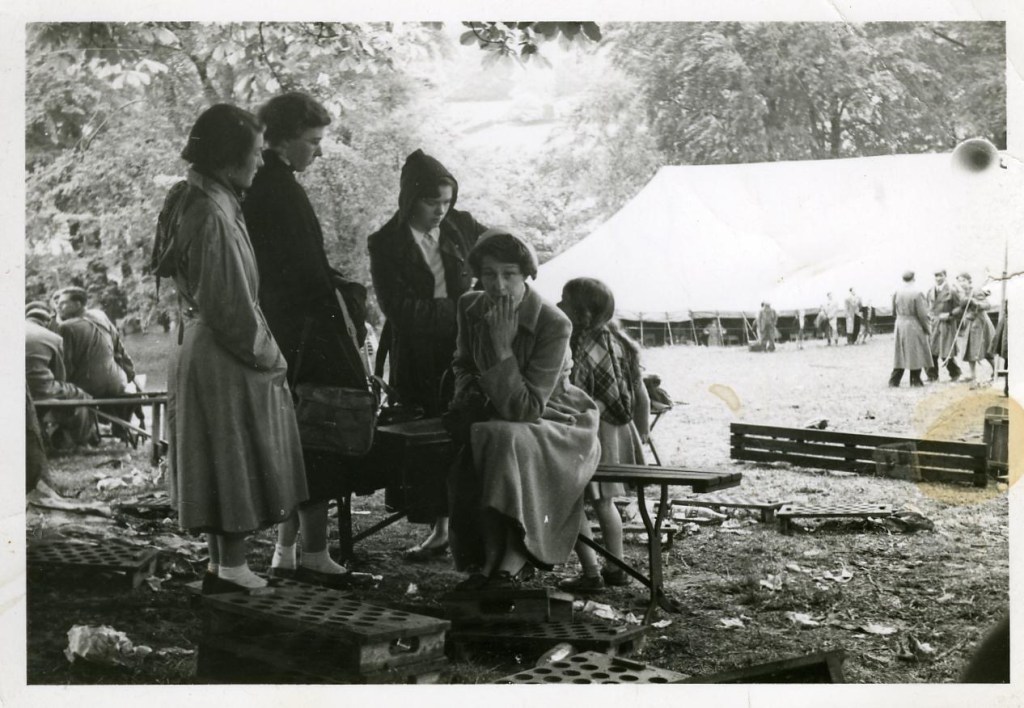
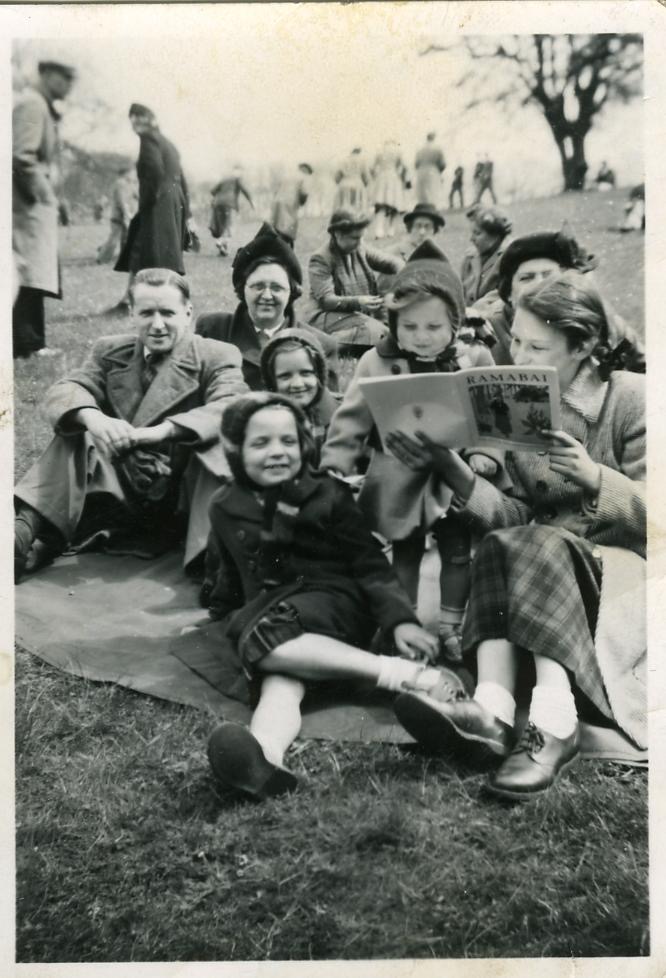
Minnie Staton at Chapel Camp: Chapel members at Cliff Cottage rally, Calver
The Chapel was established in 1862 by a group of Baptists who had come from the Sheffield area to work for Firths forge at New Whittington. I believe the Senior family contributed and congregations came from chapels in the Yorkshire Baptist association. When the brick-built chapel was erected the 1862 a date stone was placed near the apex at the front dominating the High Street and top of South Street.
In 2013 I gave some document probably a type of deed to Andrew Bell who purchased the building and was using the main body of the chapel as a metal workshop.
The school room
It is thought that the school room was added at a later date. The kitchen, vestry and toilets wing may have been added later as they are on a slightly higher level.
The school room was a large room as big as the main chapel which was accessed from a side door on the left of the garden which later was made into a car park. There was also another door to the side of the market place which was bricked up.
The Sunday school room furniture must have been the original dark varnished hard wood seats with backs and some smaller benches for little ones.
The seats had a type of red felt runner on for added comfort. These can be seen on some of the Good Friday tea photos.
The vestry was accessed up a few wooden steps. This is the wing to the left rear of the building.
It had a temperamental old gas fire and big cupboards housing the chapel pots stamped a blue logo – Baptist Church New Whittington.
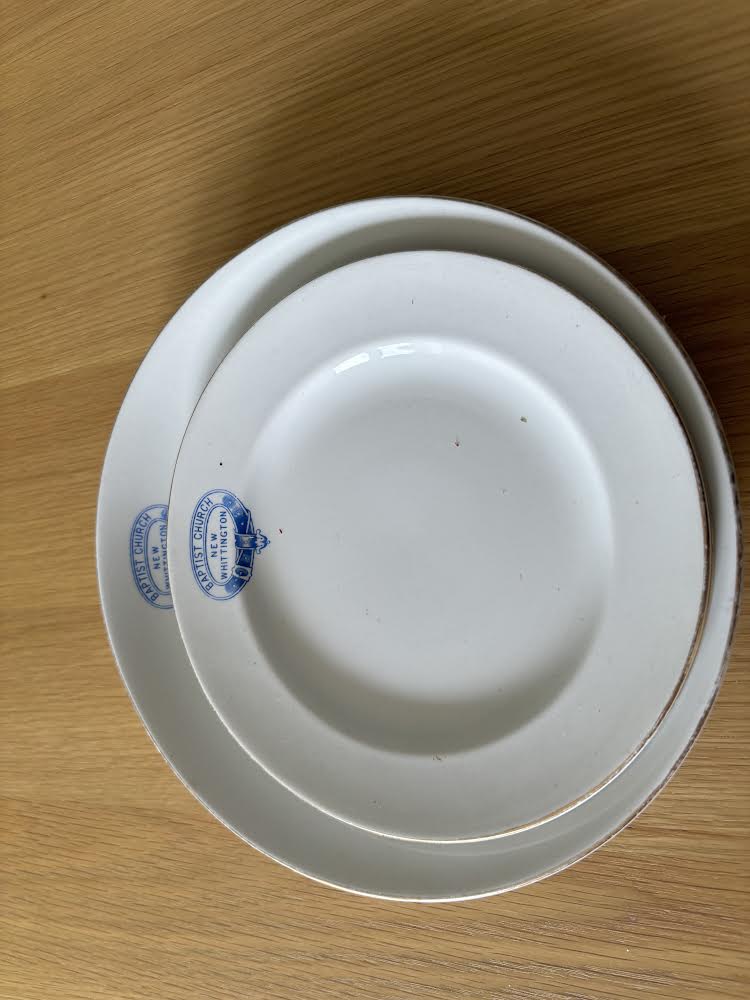
There were also three big stone tea pots made by Pearsons of Whittington Moor. I have two of these. These were brought out and washed ready for the Good Friday Tea along with cleaning the cutlery stamped with NWB.
The kitchen was accessed from this vestry with a sink and a few old tables. There was always a mice problem here which the present owner assured me was still there.
Beyond this was the two outside lavatories. These were damp bare brick and I always avoided them. In the early 1970s the kitchen was modernised and an indoor lavatory built.
The Good Friday services were a marathon! In the morning there was a procession of witness around the village, we may have been joined by other chapels with banners and hymn singing finally congregating in the Market place at the side of the chapel for a service. I think this part of the day was discontinued by the early 1960s.
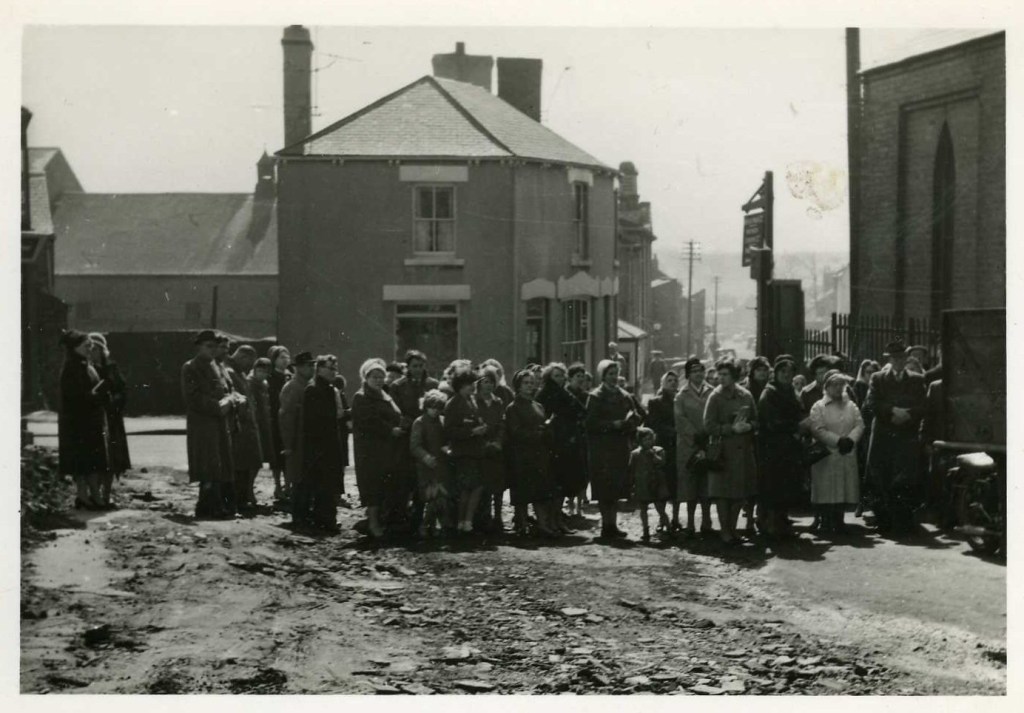
Good Friday Service in the Market Place c1958
The afternoon service commenced about two pm. Mum and the ladies of the chapel beforehand would make sandwiches and trays of cakes brought in from Barkers on Whittington Moor. The copper a hot water boiler was lit ready for the endless cups of tea.
Long trestle tables were set up and covered with large specially made white tablecloths. There was no charge for the tea but a silver collection taken at the end. I remember the treasurer once being disgusted at finding a 3d bit in!
The evening service followed with two speakers so two sermons. One from a guest minister and one from the Pastor.
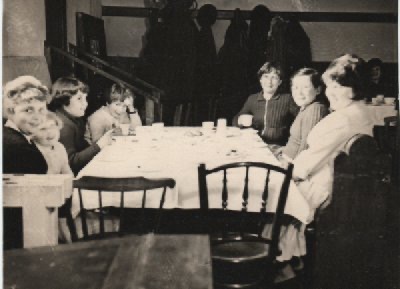
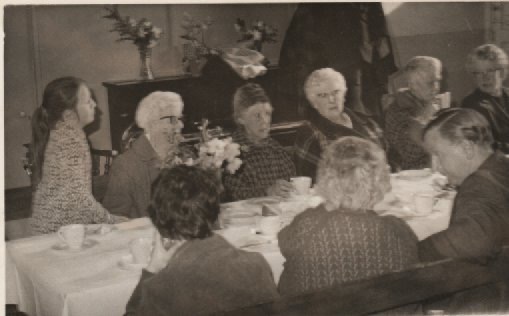
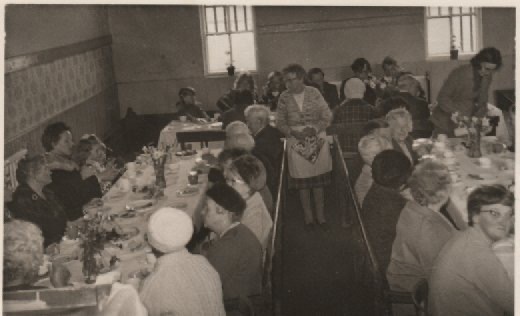
Good Friday Teas – c1965 1960’s 1972
The school room was used for the Sunday school and other chapel events such as Christmas parties and the odd funeral wake.
My Dad recalled during the 1926 general strike all the children of the village were given daily hot meals at the different chapels in the village. I have also seen a post card of a soup kitchen at the Baptist during the miners’ strike of 1912.
The Chapel
The main chapel was quite a simple room but with a very high dark wood ceiling. Three tall windows were at each side along with four at the front. These had some coloured glass decoration. On each windowsill was a long metal plate naming the person who had donated that particular window.
I have one plaque with the inscription – dedicated to the memory of Mr & Mrs S. Radford from Mr and Mrs and Winifred Holland. One of the ‘Old Ladies ‘I mention later was a Mrs Holland who lived on Brearley Avenue.
The main front entrance was accessed by a small lobby through the double wooden doors. Here there was a small notice board and a carved wall collecting box with a text and rose.
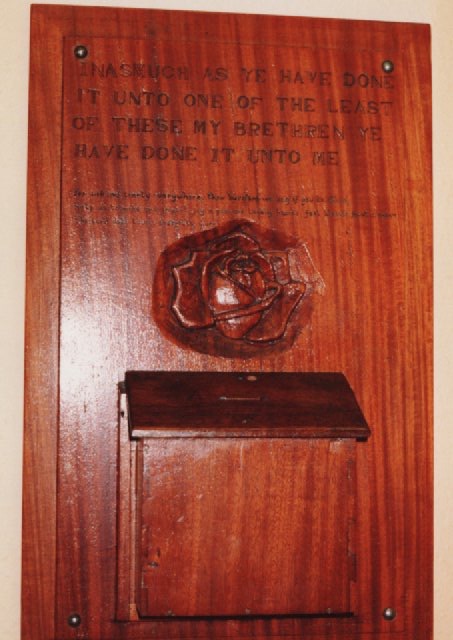
Two doors either side came onto the two right and left aisles. Coat pegs and cast-iron umbrella stands were here.
The pews were quite narrow I guess built for small Victorian bottoms and hard with ledges for Hymn books and bibles. These were covered in a felt type of runner for warmth but not much comfort.
There was a large central swathe of these with side ones both left and right. The Staton Family always had the back pew under the clock as it was convenient for Dad to greet late comers or taking out bored children such as myself!
At the front were three chairs and a communion table on which was a vase of flowers and the bible. Communion was dispensed from here. A small holder containing tiny (shot) glasses filled with cordial usually Ribena and a silver tray contained small cubes of white (usually mothers’ pride) bread. This was covered by a white lace edged cloth and removed for use at the end of service before communion.
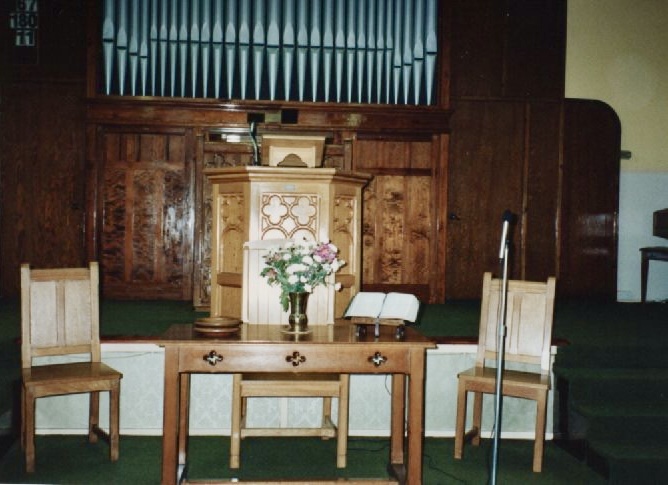
The table and two chairs had been gifted in memory of a former Pastor. The large chair and pulpit were gifted for the centenary in 1962 by John Edwards in memory of his first two wife’s Polly and Alice. He married for a third time in his eighties!
These were made by Rodgers cabinet makers at the side of the Station, Brimington Road, Whittington Moor. The pulpit had a blue velvet cover with gold tassels on the reading ledge/lectern? My sister made this and pinched the tassels off her husband’s dressing gown cord!
The pulpit was on a raised stage over the baptistry. The organ behind was installed in 1949.The plaque read, Dedicated on the 9th July in memory of Arthur Hewitt, Pastor of this church 1939-1942. The massive organ pipes dominated the front.
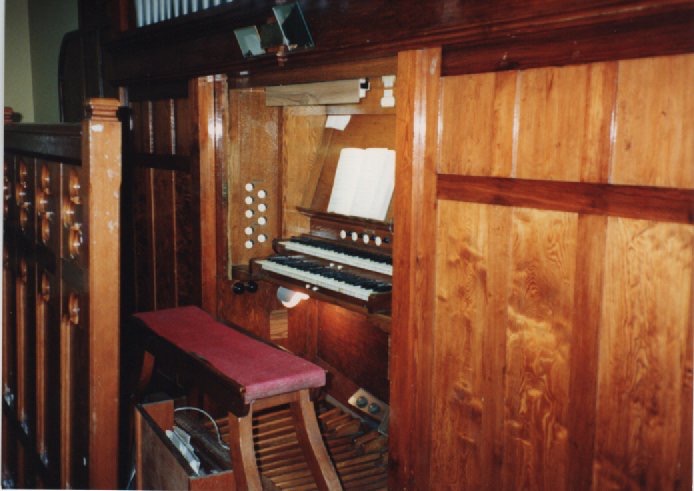
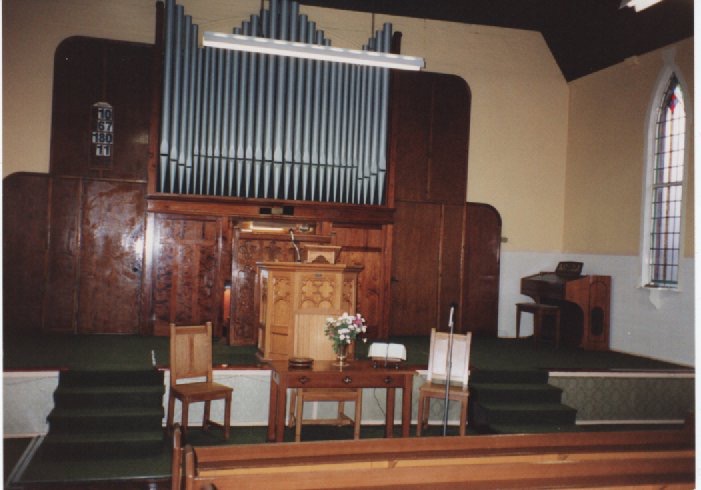
Arthur Lunn a keen organist raised the money often collecting a shilling or two weekly, he was the first organist. I believe it was made from a collection of various instruments as parts were in short supply after the War. A blind piano tuner from Liverpool would visit every year to tune and maintain the organ and Sunday school piano.
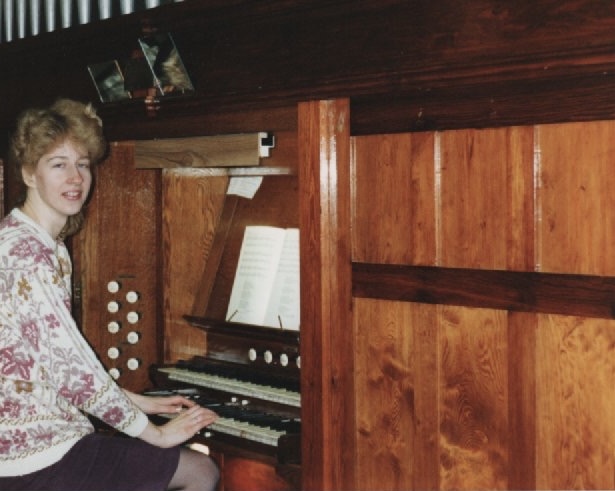
Organists
Arthur Lunn, Roy Lunn, Jean Wigfield, Catherine Roberts, Peter Farndon, Charles Whithead, Mrs Brooks, Alan Mason, Mrs Millward and the last Ruth Chappel as pictured. Many of the organists were music students earning a bit of pocket money, often leaving after a few years to go to university.
The Centenary
In April 1962 the churches centenary was celebrated. Similar to the Good Friday formant of services and a tea. Harold Harper the Church secretary worked for the council and they supplied a selection of potted plants from the hot houses which adorned both sides of the stage area.
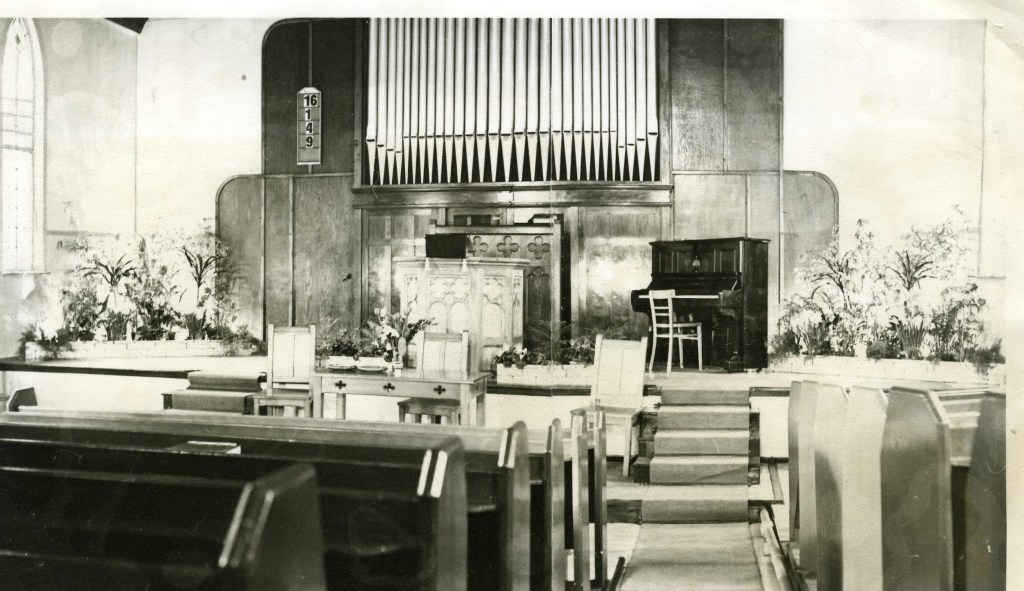
The Church had undergone a full decoration in the months before. Led by Pastor Roberts the men of the church had lined all the crumbling walls with hardboard and fully decorated everywhere.
A new bible was presented to the church purchased by the sisterhood. I did the presentation to some visiting minister.
Sunday School Anniversaries
I believe these took place in early summer. All pupils no matter what age had to learn a piece of poetry or scripture verse. A wooden platform four tiers high was erected to the right of the stage for older students. One year the students acted scenes from the bible. I was Miriam hiding baby Moses in the bull rushes, my doll Susan in Beth Roberts willow cookery basket!
Sunday school anniversary 1963
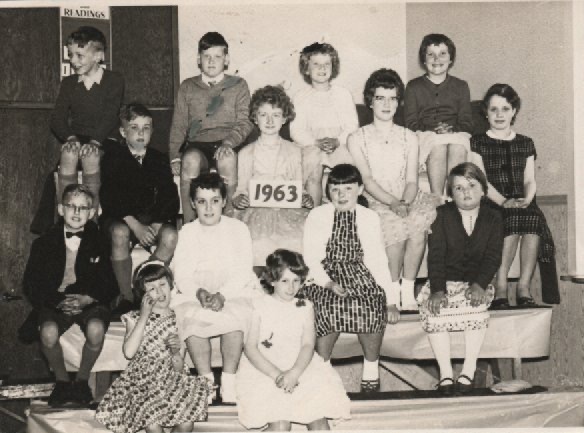
Top row Jimmy Green,?,?Shepheard, Audrey Bagshaw.
Middle Russel Oldman,?,Beth Roberts,Kathleen Nicholls.
Third Row ?,Julie Marples,?,Eileen Oldman.
Front row ?, Sylvia Staton.
Sunday School Anniversary 1964
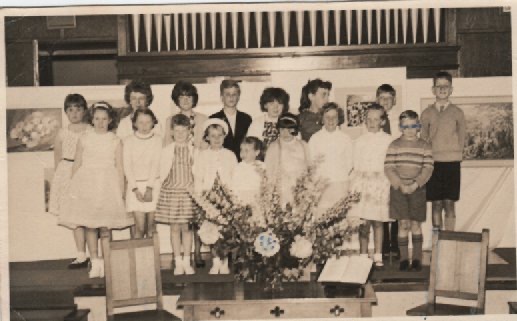
Back row left Eillen Oldman,?,?,Russel Oldman,?,Julie Marples,?,?,Jimmy Green.
Front Row Sylvia Staton ,?,Kathy Marples,?,?,Julie Wilkinson,?,Audrey Bagshaw?, Susan Green,?.
Occasionally there were other social events such as a bonfire on November 5th.This was held on the market place as it was for many years a waste land area. I do not remember a market but there was an occasional fun fair. My Dad remembered market stalls in the 1920s which were often held at night when the whole place was lit with Naphtha flares.
Sunday School Prize giving
This may have been on the Church anniversary dates in April. Most students received a book ordered from Fords of Chesterfield. The size and amount spent on each publication depended on how well one had attended Sunday School. You can imagine I always got full marks as attendance was compulsory. I got wise and started requesting the sort of books I would like as otherwise it would have been a bible every year. I had a blue leather New Testament when I wanted a book on Ballet, got that one the year after! I still have my book on Shakespeare country as I wanted a history book. It proved quite interesting as I’ve got older especially as I live near Warwickshire.
Some older students entered the annual Scripture Union Exam. Certificates and medals were awarded.
Harvest Festivals
Always held in September. I loved this time. Dad would strip his garden of fruit and produce especially his beloved dahlias. All Sunday school children would bring produce or even tins and packets all gratefully received. A centre piece would be a harvest loaf of a sheaf of bread. The basics but not food would be set out ready on a Saturday.
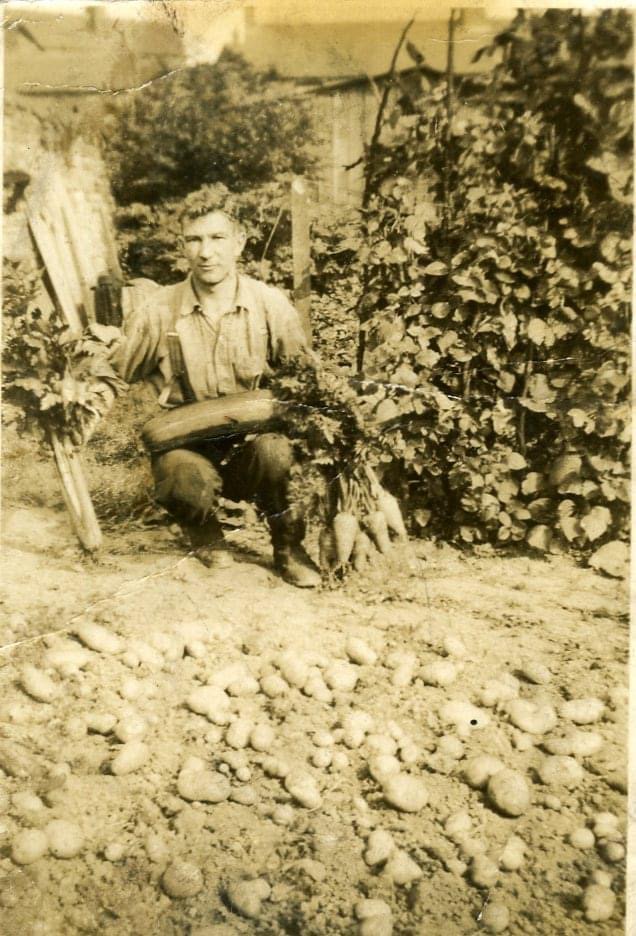
Bill Staton raiding his garden in the Crown Yard for the Harvest Festival in the 1940’s
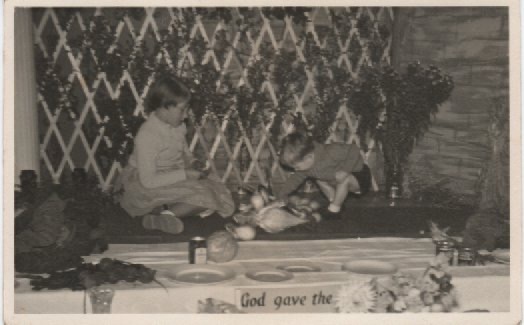
After the Harvest Festival 1963 Sylvia Staton and my nephew Andrew Hayes
One year we arrived on the Sunday morning to find rats had caused havoc with displays and smashed eggs everywhere. After the services the produce was given away to the old and the needy. I don’t recall harvest suppers or sale of produce as some churches did.
Christmas
Always the traditional Carol service with the Bethlehem Carol sheets. Sometimes we did a nativity. Pastor Roberts was an artist and painted beautiful back grounds and a plywood donkey. I eventually got to play Mary dressed in my sister’s blue back bedroom curtains. My Niece Ruth complained she was always Joseph as she was tall.
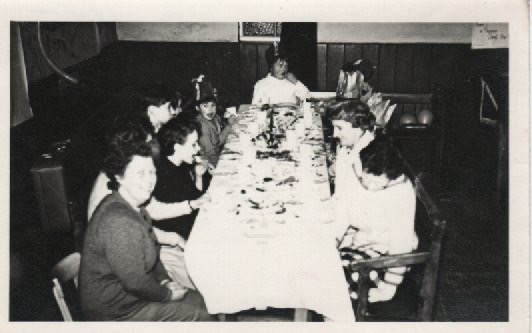
Sunday School Christmas Party 1960’s
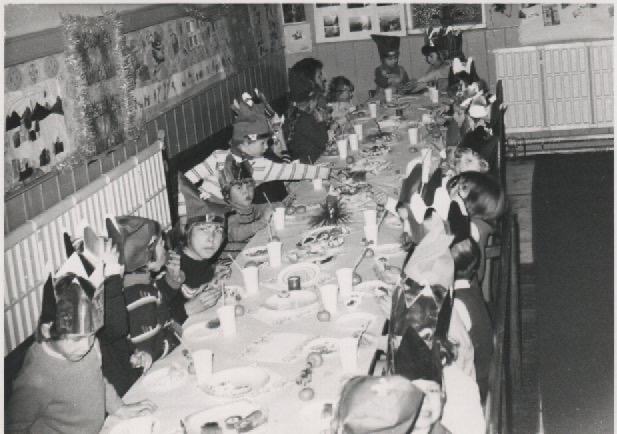
Sunday School Christmas Party 1970’s
The Pastors and congregation
I have no record of early Pastors. From memory I believe these men did the work voluntary and had full time jobs.
Arthur Hewitt was at the Church during WW2. 1939-42. Mr Buchan was a college lecturer and did the job until he moved to Newcastle in 1960. Norman Roberts an art teacher from Wingerworth, followed until c 1966. He did much for improving both the fabric of the building with his skills and attracting new younger members with families. Kingsley Rendall c1966-1973.Worked as a teacher at Dore College and lived at Calver. Mr Williams 1973-?
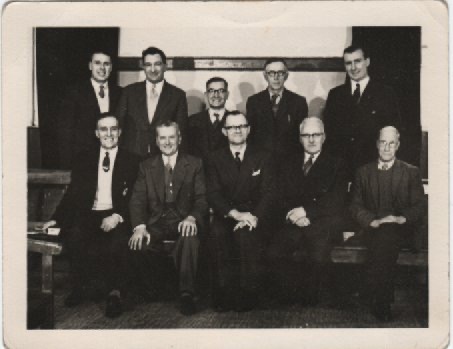
| Chapel Centenary 1962 (L-R) Standing Ivor ? From (Mosboro), William (Bill) Staton (Baptist), George Harper (Mosboro), Mr Priddle (Baptist), Tasker Lewis (Secretary YBA) Seated Harry Harper (Mosboro), Norman Wigfield (Baptist Sec.), Norman Roberts (Pastor), Mr Robson (Former Pastor), Mr Edwards (Baptist) |
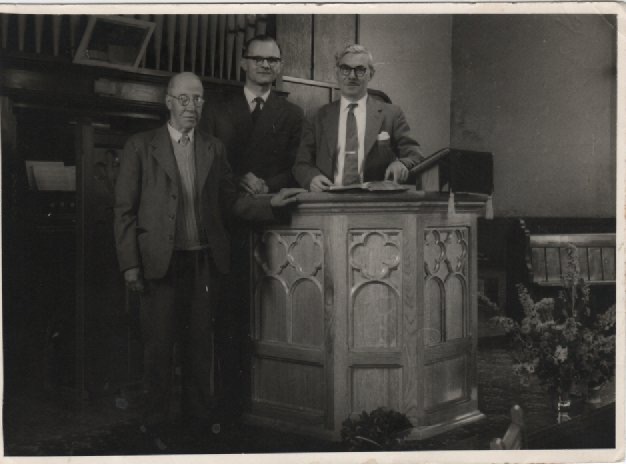
Jack Edwards, Norman Roberts Pastor, Rev Buchan former pastor
These Pastors could perform, Funerals, infant dedications and Adult Baptisms but a registrar had to be present for Marriages.
There was also Deacons who fulfilled the jobs of Treasurer, Secretary and a Sunday School Superintendent.
There was a core membership of some local families. Along with the Statons, there were the Wigfields and Harpers all originating from the village. By the end of the 1960s Harold Harper, treasurer and Norman Wigfield, Secretary had both died quite young and more of the work fell to Dad.
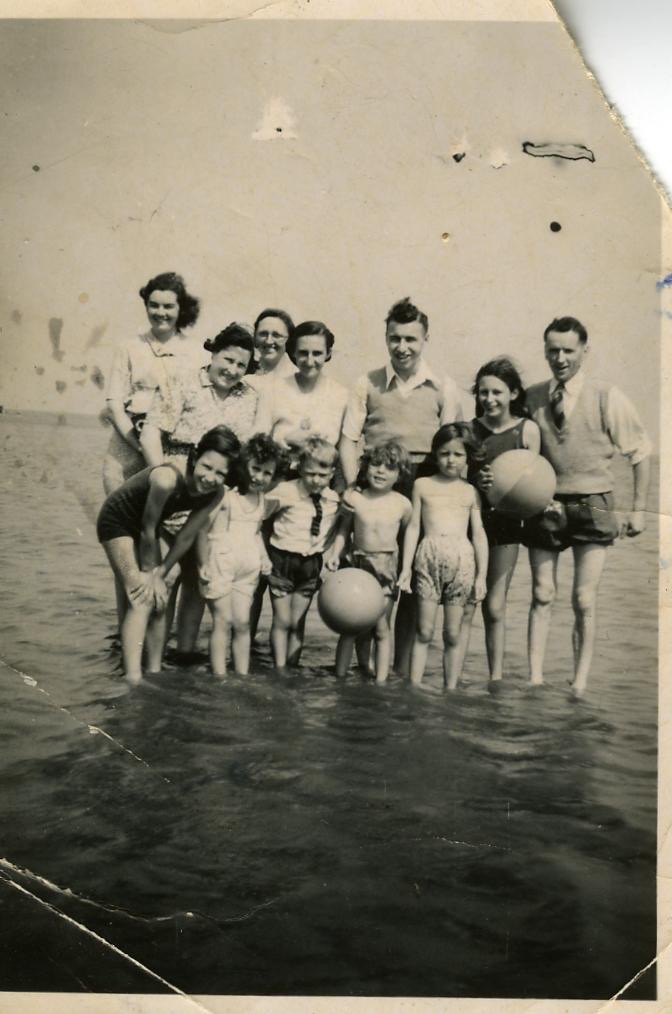
Chapel seaside outing
Arthur Lund Centre back row the organist, far right Norman Wigfield, Secretary
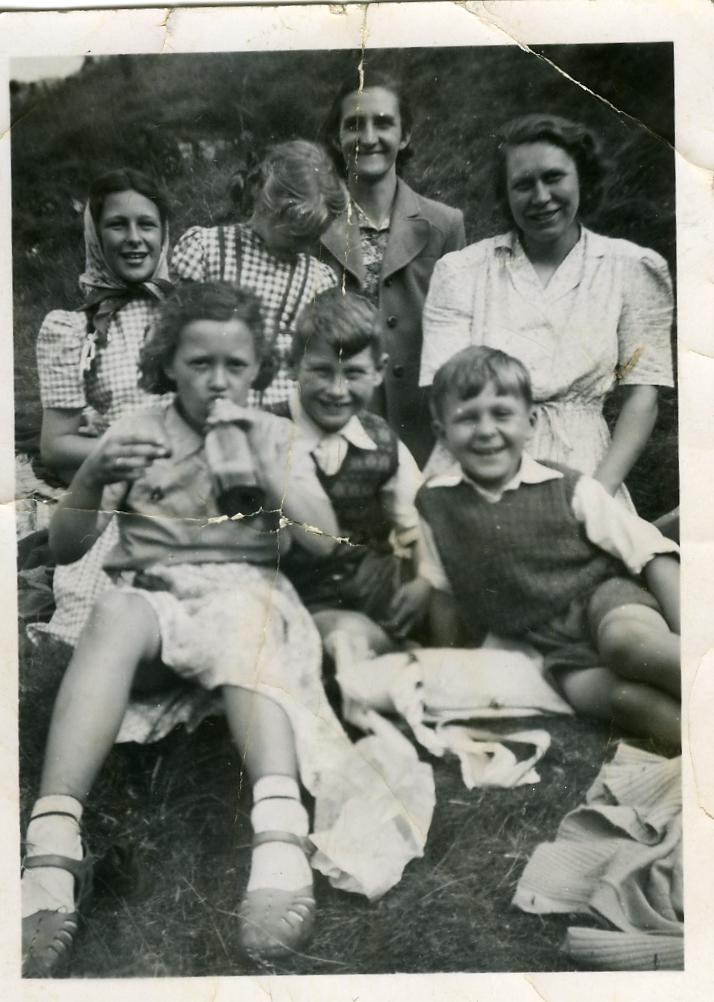
The Staton and the Wigfield families 1952
Pastor Roberts and The Billy Graham American evangelical crusades of early 1960s brought more families into the Church including the Greens and the Nicholls. Many Sunday school children came from the new council estates of Burnbridge Road area.
One friend I had at Sunday school was Julie Marples. She and her sister Kathy came from Marsh Lane and were old Mr Jack Edwards great Granddaughters. They came to visit their Gran, Mrs Parks on a Sunday. She owned and lived in the sweet shop opposite the Cinema on South Street. We were allowed to play in the shops back yard where there was a pile of old chewing gum and cigarette machines.
The house had no bathroom but there was one plumbed in and covered over in the kitchen and a toilet down the garden. I wasn’t used to such primitive conditions!
Occasionally we would visit my Grandparents Staton who had moved from Crown Yard to a council house on Devonshire Ave. Gran was a bit rough and ready so to speak but gave me jam tarts until I said I was only going to lick the jam out. She then went to swipe me one but Dad intervened. She did let me watch TV though as we didn’t have one at Home.
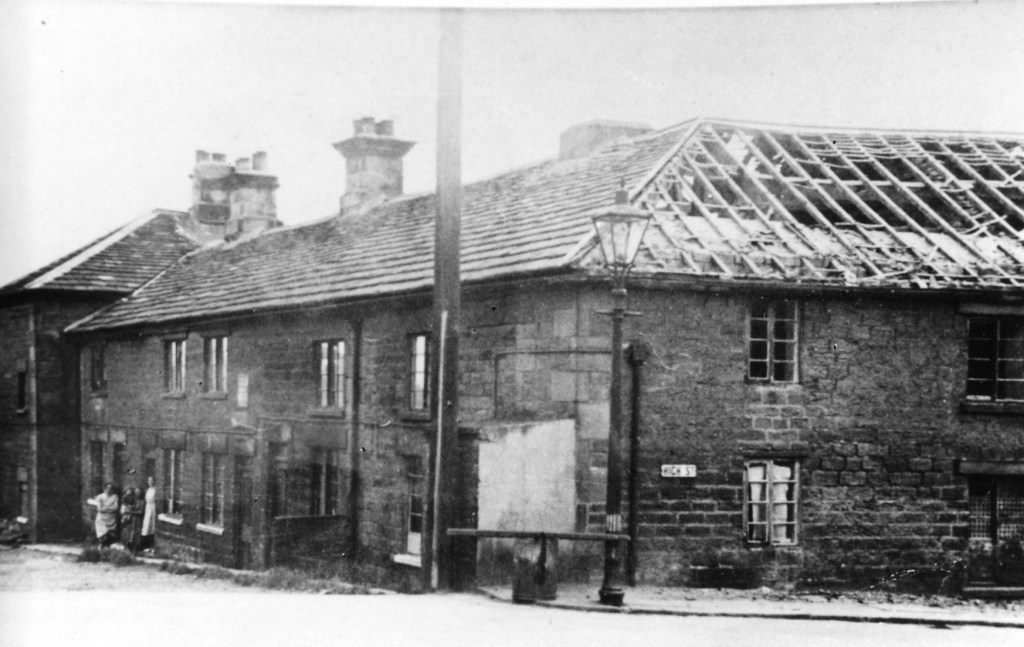
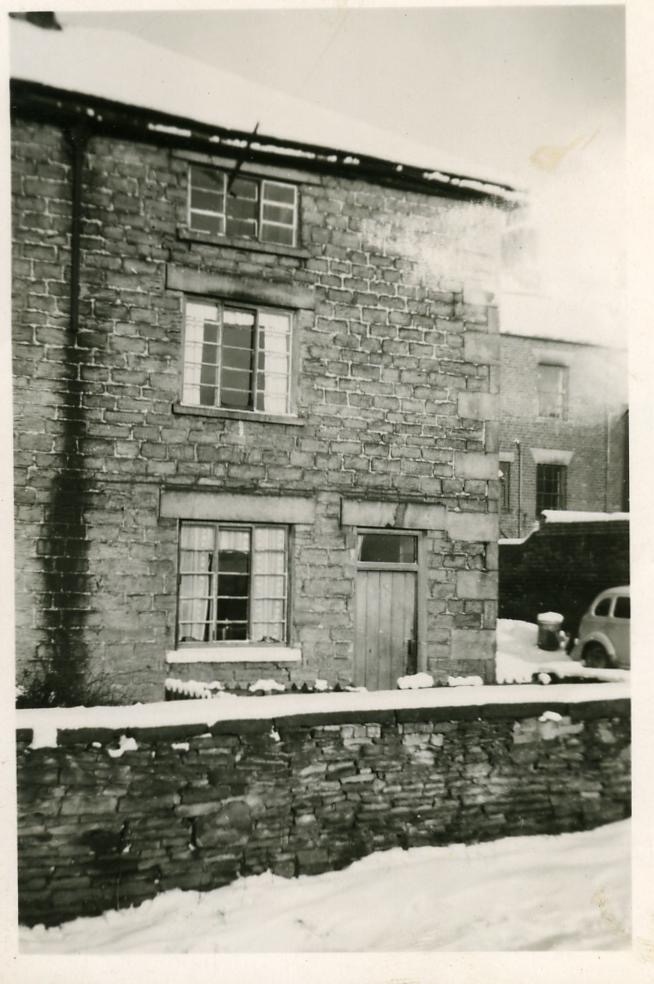
Grandparents House in the Crown Yard
The Church services by the early 1960s were Sunday school in the afternoon and evening service at 6pm. There was also a Sisterhood afternoon mid-week meeting and evening Bible study class for the men.
My parents also hosted young people meetings and bible study at their home for friends of my sisters including youngsters from other churches. When we the Statons moved to Newbold in 1951 these meetings still were held. Both my sisters were to meet their future husbands through this fellowship.
I was born there in 1955 so never lived at Whittington like my three older siblings.
After moving to Newbold, the family caught the two buses to Whittington on a Sunday afternoon. Mum would follow later with food for our tea. We ate this in the vestry with the Roberts family as they also had a long bus journey from Wingerworth.
As well as some families there was always a number of ‘Old widow’ ladies in the congregation. Always dressed up with hats and gloves and wobbly singing voices. If ‘Abide with me’ or ‘The Old rugged Cross’ was on the nights hymn selection you could guarantee a few tears and discreet dabbing of eyes.
Mrs Violet Ramsdale had a plant pot hat and a fur stole with a creature’s head on one corner which she threw over her shoulder and the ‘Thing’ would stare at me on the row behind. Mrs Back who would always be accompanied by her daughter Eva, once snatched my doll which alarmed me somewhat. I guess the poor lady had dementia.
Some of the adults were very kind, especially Mrs Bush and Mr Wigfield who gave me tuffies (toffees) or glace mints to pass the time during long sermons.
Occasionally there would be one or two Hall Girls in the congregation. These were patients at Whittington Hall hospital and often made a fuss of me or any other kids around. They were never no trouble and seem to enjoy the hymn singing.
After Pastor Roberts left, the Sunday school closed by the late 1960s so church attendance was just in the evening and we could have our tea before at home. Dad had a got a car by then so no more bus journeys with the cold wait on Whittington Moor.
I left home and moved to Doncaster in 1972 so only very occasionally visited the Church with my own two daughters.
In the 1970s thanks to My sister Joyce and her husband Keith Chappel and her daughters the Sunday school was revived and was quite a thriving community for a few years. Some other young families joined and they had more services holiday clubs and a youth group.
Sadly, by the late 1980s the families had grown and left and my parents became responsible for most jobs. There was no Pastor and services would be led by visiting preachers from the Yorkshire Baptist association.
With only a congregation of around 20 the association took the decision to close the church in 1992. The church was quite full for the last service with members from other Baptist churches coming for the final time. My parents were heartbroken but then found a new spiritual home at Dronfield Baptist Church where they remained for the rest of their days.
A few days before closing my niece Ruth Chappel and I visited and made a photographic record in three volumes which my parents treasured and these are some of the photos. When standing in the pulpit I was surprised to feel how small the actual chapel seemed now I was an adult.
The fixtures and some fittings were removed. The organ went to a dealer and organ builder for spares in Yorkshire. Jack Edwards Pulpit and communion furniture went to a new build chapel in Rotherham.
The building was sold to Andrew Bell, artistic metal worker for £35,000. The proceeds going back to the Baptist association. I visited in 2014 and he told me he has converted the chapel into a forge workshop and the school rooms into a family home.
Sylvia Whitworth (Staton)
July 2024
| Margaret Staton & John Hayes wedding 19th December 1959 |
| Joyce Staton & Keith Chapel’s wedding 11th August 1962 |
| Margaret Staton’s wedding showing the old houses at the side of the Market Place just before they were demolished December 1959. |
March 1955
Jack and Annie Staton’s Golden Wedding celebration at their home on Devonshire Avenue
Group left rear Harry Staton, Reg Staton, Nellie staton wife of Harry, Milly Sharman daughter, Annie Staton, Elizabeth Robinson Jacks sister, Jack Staton, Minnie Staton, Joyce Staton, Margaret Staton, Bill Staton, Arthur Staton, ?Robinson, Jean Sharman and husband? Boys Barrie Sharman and Billy Staton, Grandsons. Mum was hiding at the rear as she was pregnant with me.
 Whittington-History