There are separate pages on this website for the old Norman Church, the 1863 church and click below for information about the present church of St. Bartholomew
This page is based on a booklet by Trevor Nurse.
New Whittington’s Churches and Chapels.
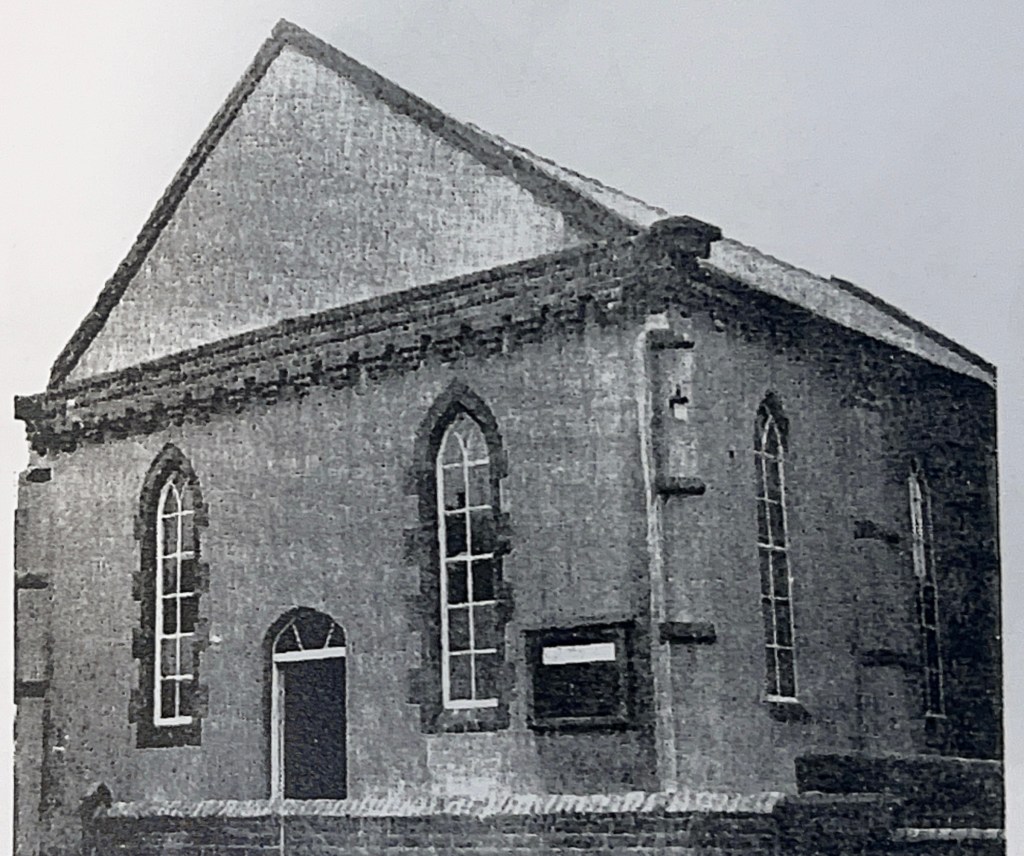
This was the first chapel to be built in New Whittington, the society formed approx. 1856-57 and was first known as the “Whittington Free Reformers”. In 1858, a piece of land was bought from John and William Fowler. It was situated on Cross London Street for building their chapel. They moved in for services the following year. Later it was called the “United Methodist Free Church” which for many people in the village was shortened to “The Free Church.” I remember as a boy going to the Christian Endeavor there approx. 1949. A new organ was installed in 1957, probably to try and boost the flagging congregation at that time. However, in the late l960s the church closed and was demolished.
Primitive Methodists. Back South Street.
This chapel was built in 1859, I would think there must be some people in the village who attended there. It served the community for 79 years. The Education Department demolished it in May 1938. They purchased the building to construct a Gymnasium on the site. This was to serve the senior school.
A quote from the Derbyshire Times of May 1938.
Special services were held in the South Street Methodist Chapel New Whittington Chesterfield on Sunday to mark the closing of the chapel and to set the seal on its amalgamation with the Wellington Street Methodist Church. In the afternoon, the scholars assembled for the service, which was led by the Superintendent, Minister the Rev. A. Gray. Mrs. W. Baines was at the piano. The scholars then went to the Wellington Street Sunday school where the superintendents Mr. Albert Shore and Mr. Joseph Cayton welcomed them. In the evening The Rev. A. Gray, who preached, made sympathetic reference to the Markham Colliery Disaster, Mrs. Baines the society stewardess was at the organ. After the congregation had filed out of the chapel the minister locked the door and all adjourned to the Wellington Street Chapel, where the society stewards received them Mr. George Green and Mr Joseph Cayton, and the congregation.
The Weslyan Church. Wellington Street.
In 1858 the Weslyan Movement began in the village. A year before this, Firths steel works was established. The West Staveley colliery began extracting coal. These two industries brought many families to this part of Whittington. People came from different parts of the county to find work. Among them was Mr. Fenwick the colliery manager and he with a few others started the Weslyan movement here. The first services were held in a building at the colliery. As the numbers grew they hired the Clubroom of the Wellington Hotel in 1859. From here the society began to raise money for a new permanent chapel to be built. Some of the main members being;
Mr. John Wright. Mr. Thomas Dimmack, Mr. Jabez Boston.
Mr. H. T. Twelves Mr. James Pickering.
It was on the 17th June 1861that they bought 200 sq. yards of land in Wellington Street for £70. 10 shillings from Mr. George Senior of Barnsley, here they built their chapel. A few years later in 1868 a schoolroom was built on the back and in 1872 an organ was bought and installed. It wasn’t till 1925 when electricity was installed previous to this the building was lit by gas.
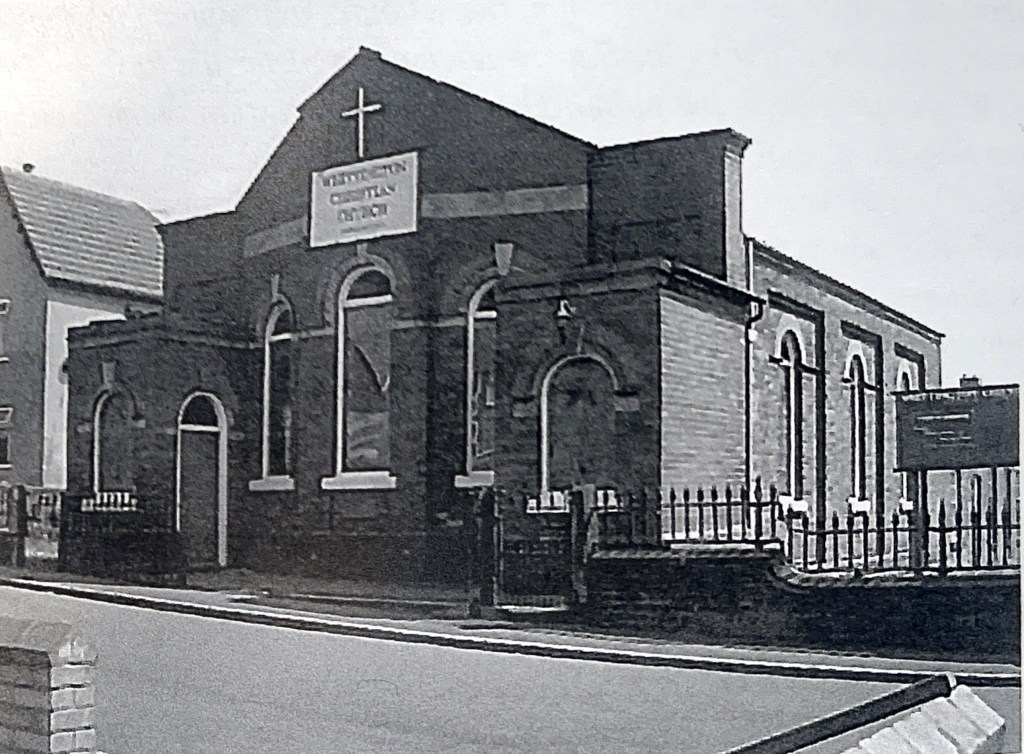
In 1932 one of its longstanding members moved to Bournemouth he was then 80 year old. This was Mr. H. Needham. He was at one time headmaster of the New Whittington school. For the church, he served as Preacher, Society Steward, Leader, and Trustee. He was a devoted Christian. Most of the above notes have been taken from their centenary program of 1961. The church is still in use today and has recently been renovated.
Baptist Chapel New Whittington
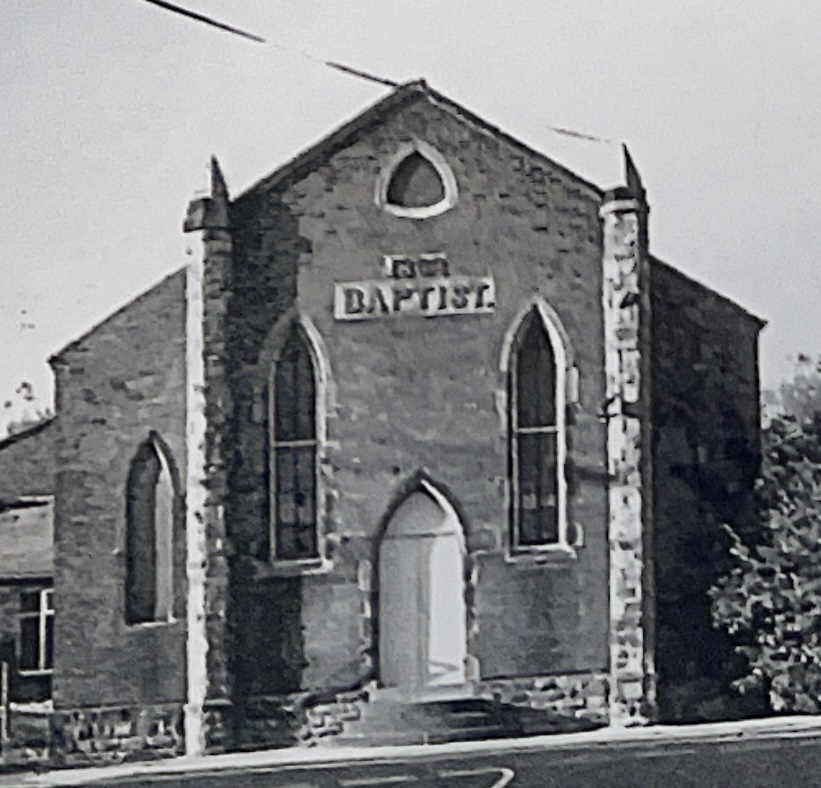
In 1862 the Baptist’s built their chapel on the High Street at the side of the entrance to the old Market Place. It cost £600 and later a Sunday school was added at the rear. Previous to this they held their services above the blacksmiths shop on Handley Road. The building today is very much the same and used today as a workshop and storage space.
See a separate page on this website dedicated to The Baptist Church
The Catholic Church
In New Whittington there is a Catholic Church which has a large following. The old church as shown, was built in 1906, and originally stood in Wellington Street. The Catholic Hall was a wooden structure, which was an ex-army barrack hut from the First World War. This was erected at the side of the church approx. 1920. In 1969, a new church hall was built on the High Street just opposite the bus stop. A square old house called Inkermen Place previously stood there. A few years later the new church was built along side, and the old Church demolished.
The Gospel Mission.The mission was built as late as 1934 and opened on the 20th of January 1935. It stood where the swimming baths are today. It was made of wooden frames with asbestos panels on the outside. The roof had asbestos tiles.
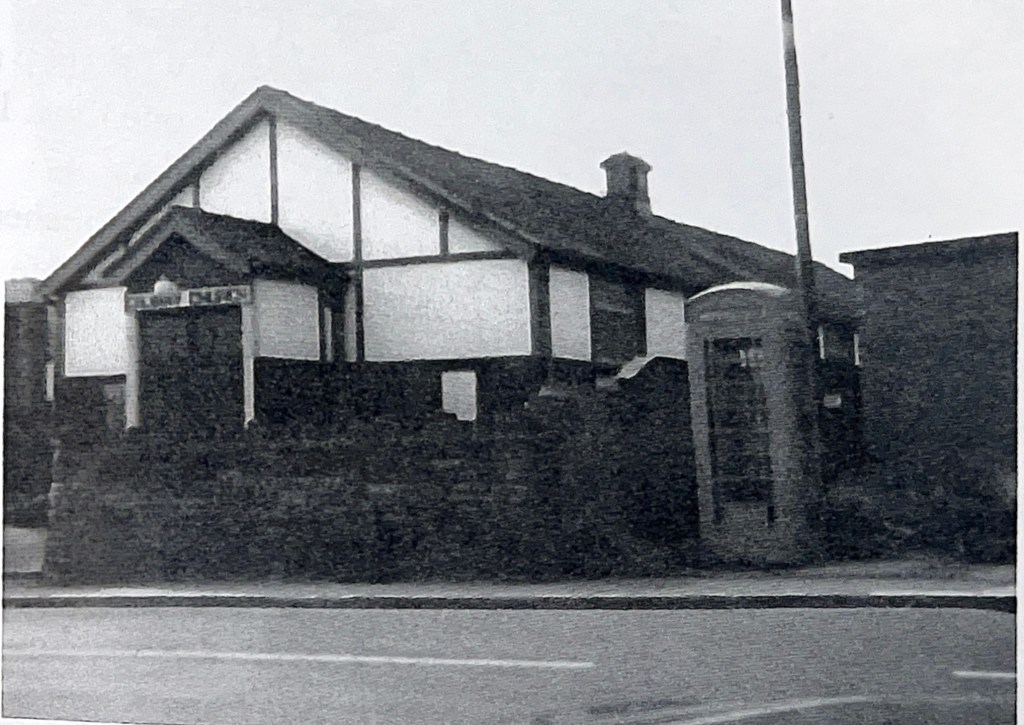
It later changed its name to The Pentecostal Church; it was eventually demolished, and the swimming baths built on the site.
The Old Whittington Chapels.
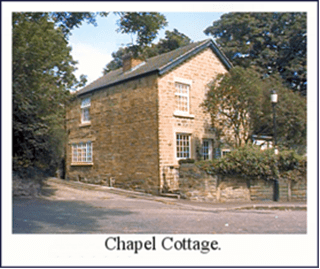
In 1828 the first Weslyan chapel was built of stone just below the Revolution House with sittings for 175 people. The building still stands today and is now a cottage appropriately called “Chapel Cottage.” This chapel eventually became too small and a larger one was built in Church Street at a cost of £1500, from the plans of Mr. Blake of Chesterfield. It was built in 1894 on the Gothic style and has sittings for 300 people. The builder was John Sims of New Whittington
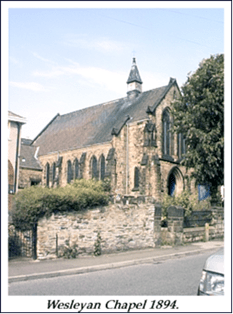
Now the Seventh Day Adventist Church
Primitive Methodists.
This movement built their chapel at Old Whittington in 1865, they called it “Mount Tabor”. It was situated on Church Street just opposite the school. It was first designed to hold 160 people and later extended to hold 250. It was used up to the 1960s then demolished. Flats and houses now occupy the site, and the area is known as ‘The Mount’.
(If anyone has any pictures of the Primitive Methodist Chapel please get in touch)
The Church of England Mission’s.
I often wonder what the Church of England thought. They observed the increasing rise and popularity of the other denominations in the village. I am amazed. They raised money in a relatively short time. It was enough to buy suitable sites and build their chapels.
The church of England’s answer to this was to build two Mission Churches. One was for the population growing at Sheepbridge.
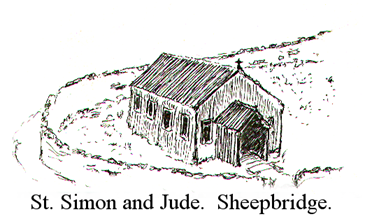
The other was for the fast-growing population on the East side of the village at New Whittington.
The Sheepbridge Mission Church was built in 1875 on the corner of Prospect Road with Sheffield Road. As a boy I can just remember the building of corrugated steel sheets. In the back of my mind, I think it was painted green. I wonder what it looked like inside. The outside never looked like a church to me. It was called St. Simon and Jude, and although it was only to be a temporary building it lasted till 1957. The sketch is my impression of how I remember it. In 1958 a more modern Mission was built in George Street and was demolished approx. 1975.
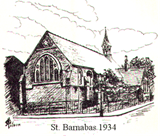
The New Whittington Mission was called St. Barnabas and built in a more substantial style at the later date of 1884. In 1927 it became the parish church of New Whittington, thus creating a separate parish. The pen drawing was done by George Henry Hilson and appeared in the Church Jubilee booklet of 1934. The other picture was taken approx. 1952, by then a new bell tower was built, the old one becoming unsafe
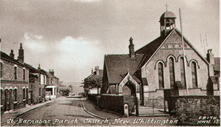
Parish Church of New Whittington approx. 1950.
Whittington Moor Churches and Chapels.
Weslyan Methodist Sheffield Road Whittington moor.
John Wesley visited Chesterfield in August of 1776. He preached in the Market Place. He repeated this the following year. In 1795 a Weslyan Chapel was built at Saltergate thus starting the Weslyan movement in Chesterfield.
On Whittington Moor the Weslyan’s began their movement in a large wooden structure on Pottery Lane. This structure was one of the pottery buildings. William Johnson the owner of the pottery was the leader, this was in 1835. At that time, not many houses existed on the moor. There were just a few around the bottom of Pottery Lane. A little settlement was present at the junction of Sheffield and Eckington Road. Another bunch of houses was located at the bottom of St. Johns road.
The Newbold Weslyans built their chapel in I842, with this the Pottery Lane Weslyans disappeared. Then in 1870 the Clubroom of the Queens Hotel was rented for services. The congregation increased in 1872. A piece of land was purchased from James Patrick Hullerby for £72. They planned to build a new church.
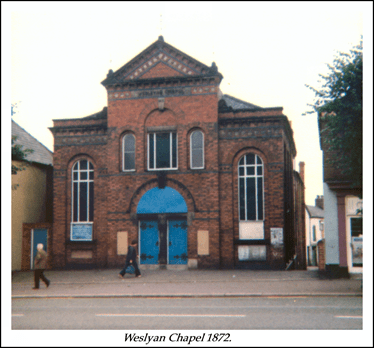
The trustee’s being:
Joseph Cartwright. lronfounder from Whitt. Moor. George Wells. lronfounder Whitt. Moor. Thomas Emerson Fenwick. Gentlemen New Whittington. Samuel Rogers Contractor from Whittington. John Wem Contractor Whitt Moor. William Hopkinson.Cordwainer of Whittington. Henry Kent of Brampton. William Davenport of Chesterfield. Richard Ward of Chesterfield Chemist. John Walker of Handley. Farmer. William Jarvis Pottery Manager.
The next year a schoolroom was built at the back and Mrs. Fenwick laid the foundation stone. By 1902 the schoolroom became unsafe and a new separate school was built on Station Road in 1904 by Mr. John Wright a builder from Barlow at a cost of £1277.
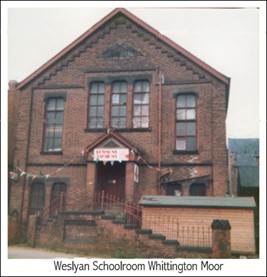
In 1941, the Primitive Methodists and the Weslyans amalgamated. The church was then known as the Sheffield Road Methodist Church. The first service of the combined churches took place on the 18th of January 1942. The church was altered and renovated inside many times throughout its life. It was eventually demolished to make way for the new A6I by-pass.
The army occupied the schoolroom through the Second World War and didn’t vacate it till 1947. In 1949 the building was leased to the Inland Revenue until 1964 then Henry Wigfall and sons leased it as a warehouse until it was demolished about the same time as the chapel.
The Henry Street Mission Hall.
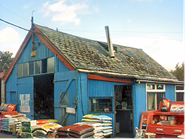
This little mission hall was part of the Weslyan Church and was built in l90l for the small community on Pottery Lane and Henry Street at a cost of £140. It was opened on the 10th of July 1901. Mr. C. E. Twelve’s was the secretary. Throughout the following years the Sunday school always attracted the children of that district. However, the older founder members gradually died and it was decided that the Mission should close in 1935. It was sometimes referred to as the Tin Mission Hall because it was made of corrugated steel sheets. The old building still stands today and is part of Hepworth’s coal yard, where it is used for storage and the front past as an office.
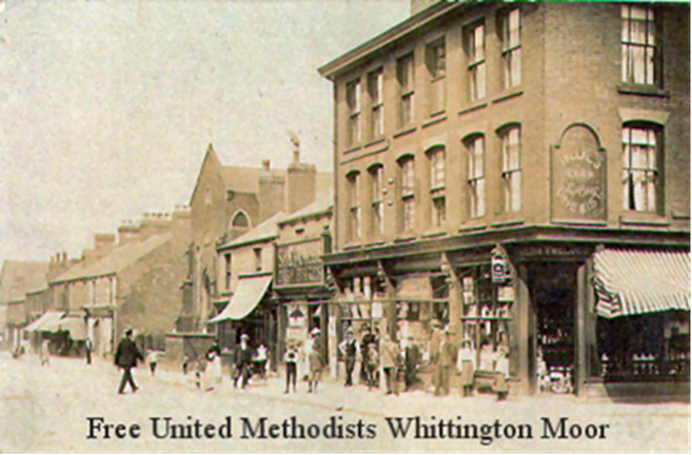
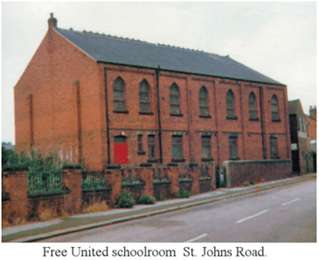
Their large chapel was erected in 1867 on the corner of Sheffield Road and Duke Street. By approx. 1900 the school accommodation was found inadequate, and a new site found on Avenue Road. This, however, was found unsuitable for building and eventually sold thus making the church a little profit. Later another site was acquired in St. Johns Road from Messrs. Plowright and Bradshaw containing l628 sq. yds. At a cost of £200. The old chapel and schoolroom was sold in 1904 for £1110. The same year building commenced on the St. Johns Rd. site to build a new schoolroom and chapel. The schoolroom was to be built first to accommodate 400 pupils, the school and site was estimated to be around £2000. The contract for the building was given to Mr. Jas Stubbins for £1700. And Mr. William Glossop of Chesterfield was the Architect. The Chapel was to be built when the schoolroom was completed, but never was. The schoolroom was a very large building as can be seen from the photo and was demolished for the new road layout of the A 61 bypass.
Primitive Methodists Whittington Moor.
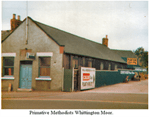
This movement first built a small chapel in a place called Buntings yard in 1841. The building still stands today and has been extended at the front to come up to the pavement. For many years it was the British Legion Club, and at present called the “Chesters Club.” My photo of it was taken about 1970.
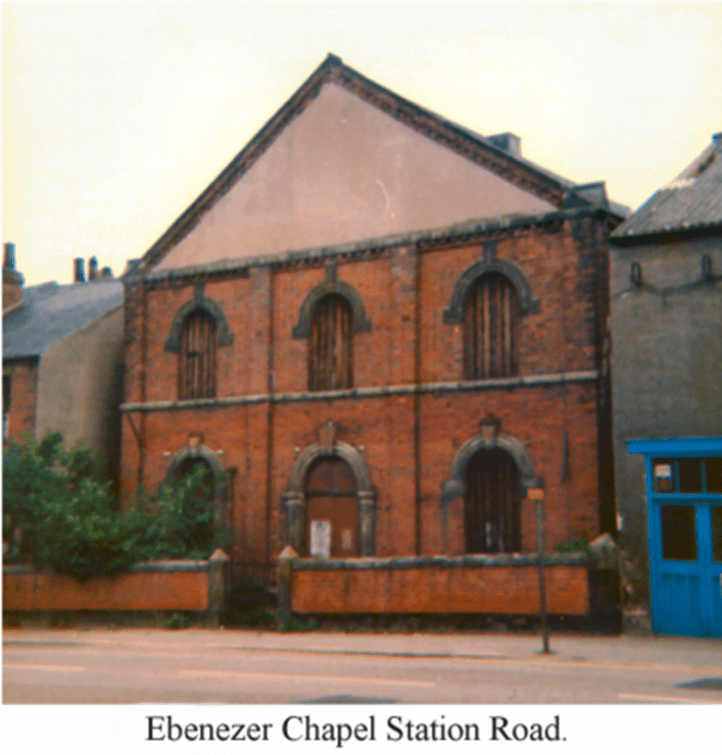
Later in 1897 a much larger chapel was built on Station Road where the large roundabout is today, this was called the “Ebenezer Chapel” and held 600 people.
The Congregational Church Avenue Road.
This church stood just behind where the Lidl supermarket is today, it also had a schoolroom which seemed to be well used, this was built in 1878. The church would be built a little earlier. Some of its main members were the Pearson family of Pearson’s Pottery.
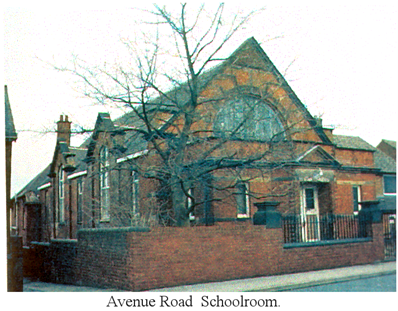
Also in Avenue Road there is another church hall or Schoolroom. Above the front door it had a date of l9l0 and therefore I would assume that this was when it was built.
Salvation Army Barracks Shaw Street.
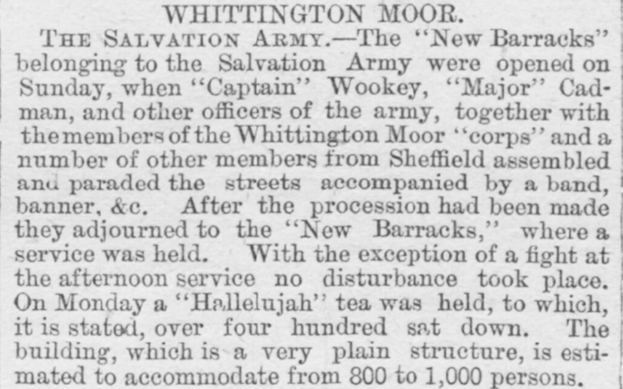
This was built in the late I880s. I don’t know when they vacated the building, but approx. 1968 it was bought by Derrick Allsop the heating engineer who used it as a store and office. I remember it quite well as I worked there for two years.
 Whittington-History